Showing posts with label purchase silver. Show all posts

Tuesday, February 1, 2011

So Called Dollars

This article is taken from the book So-Called Dollars by Harold E. Hibler and Charles V. Kappen.

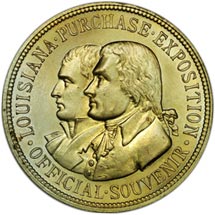
For the last 85 years or more, coin collectors and dealers alike have used the term "so-called dollars" to designate metals of near-dollar size; at first of a commemorative or exposition nature, later of a monetary kind.  Extension of the term now includes certain kindred pieces not otherwise classified specifically.  Perhaps the first written use of the label was by Thomas Elder, New York coin dealer in his sale of Sept 27-28, 1912, in describing Lot 395, the Theodore Roosevelt medal of the 1904 Louisiana Purchase Exposition, St. Louis.  Such items long since have grown in popularity and importance to the extent that they have achieved an independent status and represent a separate and distinct series of their own.


Since the days of the Roman Empire, medals have been prized for their aesthetic value and for centuries artists have found an eternal challenge in this medium of expression.  Certainly in our country there have been numerous outstanding sculptors, known as such to connoisseurs of American art but identified by numismatists largely as coin designers or medalists.  The very freedom of thought and expression provided these artists has produced many so-called dollars of diverse and rare beauty.  Pursuit of such a collection, while sometimes difficult is most rewarding.

Friday, January 21, 2011

Coin Grading Guide: Walking Liberty

This article is taken from the NGC's website.  We hope you will enjoy this unique review of our nation’s coinage.

Grading Walking Liberty Half Dollars (1916-1947)


Almost everyone's short list of favorite coin types includes the Walking Liberty half dollar. The United States Mint didn't share that view, however, as coins of this type were very difficult to strike; even proofs sometimes lacked complete details.

The Mint's Engraving Department attempted to correct this problem by sharpening the obverse master hub on several occasions, but the fundamental problem of poor metal flow into the dies proved insurmountable. This fact presents a challenge when attempting to grade Walking Liberty halves, as many of the pieces coined during the 1920s and earlier seem worn even when fully lustrous. This also is true of some of the branch mint issues of the '30s and '40s, particularly those coined at the San Francisco Mint.

Circulated halves are quite popular with collectors, though these coins did not wear evenly and can be unattractive in grades below Fine. The guidelines and photographs presented in The Official American Numismatic Association Grading Standards for United States Coins are very useful in determining the grades of circulated coins. This book also offers detailed descriptions of each Mint State grade level, though the most effective teaching tool is always hands-on experience.

The figure of Liberty and the eagle were both quite susceptible to contact marks from other coins, both before and after leaving the mint. These elements are in high relief and received only slight protection from the raised rims. As with any coin type, the Walking Liberty half dollar features certain areas where contact marks or hairline scratches have a greater impact on grading than they do in other areas. These are described in the ANA's guide as Prime Focal Areas and include the obverse field at the right (above the motto IN GOD WE TRUST) and the eagle's breast, left leg and left wing. Any surface disturbance occurring in these areas weighs heavily in lowering a coin's grade. Secondary Areas include the obverse field at the left, the sun's face and rays, Liberty's right arm, the flag drapery below it and the date area. Contact marks or hairline scratches located in these places still affect a coin's grade, but to a lesser degree.

Toning also is a grading issue with Walking Liberty halves. Coins of this type typically tone in an irregular and sometimes quite unattractive pattern. They're not likely to produce the beautiful concentric circles found on simpler designs. That's why you won't see very many toned Walkers in the marketplace, as many such coins have been "dipped" at some point to remove blotchy toning. There are exceptions, of course, and attractively toned examples may earn an extra grading point or the NGC star designation for superior eye appeal. Still, you should not be put off by dipped coins, particularly if their mint luster is unimpaired.

With their areas of exposed relief, Walking Liberty halves are particularly vulnerable to light stacking friction, or "rub" as it's sometimes called. This typically appears on Liberty's breasts, the breast and upper left leg of the eagle and the rims. Before the advent of certified grading, coins with such rub frequently were sold as mint state examples. These "sliders" are now graded AU-58, and that grade was devised specifically to describe such coins.
Before I conclude this discussion, a few additional words about striking quality are essential. The greatest deficiency in metal flow typically occurred at Liberty's left hand and the branch stem on the obverse, and at the eagle's breast and left leg on the reverse. Only on proofs dated 1936-42 are all of these elements brought up well, yet even some proofs are a bit indistinct in the shape of Liberty's hand. Many Denver and San Francisco Mint coins show additional weakness in Liberty's head, the olive branch and the date area. If severe, such weakness can lower the grade of a Mint State coin, and it can impair the wearing quality of circulated coins as well.

If you have any questions about buying or selling Walking Liberty half-dollars, please send us an email at info@usacoinbuyers.com and we can help you.

Monday, January 17, 2011

Martin Luther King, Jr. Stamps

Since the death of Martin Luther King Jr., memorial stamps have been issued in his honor worldwide.


The first postage stamp to honor the internationally known civil rights leader was issued by Ras Al-Khaimah on May 25, 1968. Other places have also issued stamps such as Cameroon, Mali, Sharjah, Mexico, India, Liberia, Rwanda, and the Virgin Islands. More recently, other states have issued stamps and postal souvenir sheets in Dr. King's honor.


Today, the civil rights leader has had more postage stamps issued in his honor than any other Black American. On January 13, 1979, the United States Postal Service unveiled a 15 cent commemorative stamp as a memorial to Martin Luther King Jr. during ceremonies at the Ebenezer Baptist Church in Atlanta. It was the 10th stamp in honor of a Black American and the second stamp issued in the Black Heritage USA Series which recognizes the contributions of Black Americans to the development of the United States.

The U.S. Postal Service has issued 166,435,000 King stamps.

Thursday, January 13, 2011

Proof Sets

What is the difference between the United States Mint Proof Set and the United States Mint Silver Proof Set?


Both coin sets use the same "proof" manufacturing process, and both contain the same number of coins. However, the United States Mint Proof Set is made with the same metal alloys that the United States Mint uses to produce coins for general circulation.

The Roosevelt dime, Kennedy half-dollar, and the quarters contained in the United States Mint Silver Proof Set are minted in 90% silver alloy.

SILVER Proof Set


Wednesday, January 12, 2011

Satin Finish Mint Sets

Here is a great article we found on http://coinblog.org/:


The United States Mint has indicated that the "satin finish" will no longer be used for the annual Uncirculated Mint Set. This finish had been used for the sets since 2005. From 2011, a brilliant finish will be used.
The satin finish has a frosted look that is created by sandblasting the coin dies and burnishing the coin blanks. This created coins that were potentially in higher grades, provided they were not covered by contact or handling marks.
For some years such as 2005, higher grades are abundant. However, in the past two years, more often than not coins could not achieve the highest grades due to the aforementioned contact marks.
With the change, registry set collections will have less coins to worry about finding each year. Some interesting subsets are also created, consisting of satin finish coins issued from 2005 to 2010. Personally, I had been working on a satin finish Presidential Dollars Set. Now, I will try to complete this collection in earnest.
The scheduled release date for the 2011 Mint Set is February 8, 2011. This will be many months earlier than the release date set for the 2010 Mint Set.